The Ivory files: How Malawi’s most wanted Traffickers vanished while an international syndicate lived on
A confidential international security dossier reveals how convicted Malawian ivory traffickers Chancy and Patrick Kaunda allegedly helped move tonnes of elephant tusks from Africa to Asia, and how they evaded justice for years. Now, after one brother was…
 By admin7 August 2026 · 6 min read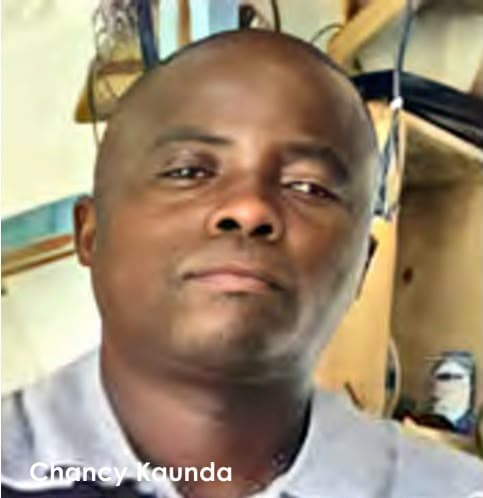
A confidential international security dossier reveals how convicted Malawian ivory traffickers Chancy and Patrick Kaunda allegedly helped move tonnes of elephant tusks from Africa to Asia, and how they evaded justice for years. Now, after one brother was arrested in South Africa, The Citizen Eye investigates the syndicate’s reach, the failures that allowed the fugitives to disappear, and the networks that may still be operating.
BY OUR INVESTIGATIONS DESK
For years, Chancy Kaunda was a fugitive.
Convicted in Malawi and wanted in Tanzania, he had managed to evade efforts to locate him despite being identified by investigators as a key figure in a regional ivory trafficking investigation.
Then, after years on the run, he was found in South Africa.
A highly confidential international security dossier obtained by The Citizen Eye paints a chilling picture of a sophisticated criminal enterprise that moved tonnes of elephant ivory across Eastern and Southern Africa and into Asia, allegedly with the assistance of transporters, clearing agents and foreign financiers.
At the centre of the dossier are Malawian brothers Chancy and Patrick Kaunda, described by investigators as “key figures in a well-organised criminal syndicate operating across several countries in Eastern and Southern Africa, with strong links to Asia.”
Our investigation has established that the two men were wanted for allegedly organising and financing the smuggling of vast quantities of ivory across the region between 2002 and 2013.
Yet despite being convicted in Malawi and wanted in Tanzania, the brothers somehow slipped through the cracks of regional law enforcement and vanished without a trace.
Now, after years on the run and an extensive international manhunt, one of them has finally been found.
Chancy Kaunda has been arrested in South Africa.
Confirming the development, the Director of the Department of National Parks and Wildlife (DNPW), Brighton Kunchedwa, said Kaunda was apprehended following extensive surveillance by INTERPOL, which tracked his movements and established his place of residence.
“It is true that Chancy Kaunda has been arrested in South Africa after years on the run. This is very exciting news for us as a country because it demonstrates Malawi’s commitment to fighting wildlife crime and ensuring that offenders are brought to justice,” Kunchedwa told The Citizen Eye in an exclusive interview.
He said the arrest should serve as a stark warning to other wildlife criminals that justice may be delayed, but it cannot be evaded forever.
Kunchedwa added that the government is now working to have Kaunda deported to Malawi so that he can serve the prison sentence that has remained outstanding since his conviction in 2019.
“My understanding is that the Malawi Police Service will work closely with their counterparts in South Africa and through INTERPOL processes to facilitate his return to Malawi, where he will be recommitted to prison to serve his sentence,” he said.
On 23 May 2013, Malawian authorities arrested Chancy and Patrick Kaunda in Mzuzu after intercepting a truck carrying 781 elephant tusks weighing 2,640 kilograms.
Investigators later established that the shipment had originated in Dar es Salaam, Tanzania, and entered Malawi through the Songwe border post.
According to the confidential security report, the brothers personally supervised the packaging of the ivory and arranged fraudulent transport documents.
During questioning, Chancy Kaunda allegedly admitted that he and his brother had been hired by Chinese nationals Steve Wang and Peter Wang to transport the consignment through his company, City Car Hire.
That seizure would ultimately expose what investigators believe was one of the largest and most sophisticated ivory trafficking operations ever uncovered in the region.
Just weeks later, Tanzanian authorities raided a property linked to one of Chancy Kaunda’s associates and discovered another 347 ivory tusks weighing more than one tonne.
According to the report, the owner of the property allegedly confessed that the ivory belonged to Chancy Kaunda.
Tanzania subsequently issued INTERPOL Red Notices for both brothers.
Perhaps the most explosive revelation in the dossier is the alleged role of the Kaunda brothers as middlemen for an Asian criminal syndicate.
INTERPOL investigators suspect that Chancy Kaunda worked directly with Chinese businessmen Peter and Steve Wang and facilitated at least fourteen ivory shipments to Asia between 2010 and 2015.
The shipments were allegedly disguised as precious stones, semi-precious stones and timber products before being shipped to destinations including Singapore, Malaysia and Indonesia.
The report also links the syndicate to the infamous 2002 Singapore seizure of 6.2 tonnes of ivory, one of the largest ivory busts in history.
Investigators believe the ivory was transported by land from Malawi to Mozambique before being shipped to South Africa and eventually to Asia.
In 2019, a Malawian court sentenced Chancy and Patrick Kaunda to eight years in prison and imposed fines of MK5 million each.
The fines were paid. The prison sentences, however, were never served.
According to the INTERPOL report, the brothers “managed to evade all efforts by law enforcement agencies in the region to positively identify, locate and arrest them.”
The INTERPOL dossier suggests that Chancy Kaunda may have been living and operating in South Africa for years.
The report states that his last recorded entry into South Africa was on 19 January 2019 and that no exit record could be found.
It also identifies telephone numbers, businesses, bank accounts and associates allegedly linked to the brothers in South Africa, Zambia and Mozambique.
Investigators even raised the possibility that the brothers may have acquired nationality or residency in another country after their Malawian passports expired.
The latest revelations come at a sensitive time for Malawi’s anti-wildlife crime efforts.
For years, investigators and conservation groups have suspected that the trafficking network once linked to Peter and Steve Wang did not disappear after the arrest of the Kaunda brothers.
Instead, they believe parts of it were inherited by convicted Chinese wildlife trafficker Lin Yunhua.
Lin was sentenced in 2021 for wildlife trafficking offences after authorities recovered elephant ivory, pangolin scales and hippopotamus teeth from his residence in Lilongwe.
The case was hailed internationally as a landmark victory against organised wildlife crime. But the celebrations were short-lived.
A subsequent corruption investigation alleged that Lin had cultivated relationships with influential individuals and sought to manipulate the criminal justice system.
The recent decision by the Director of Public Prosecutions to discontinue that corruption case has reignited fears that the criminal networks behind Malawi’s illegal wildlife trade may still enjoy protection.
The arrest of Chancy Kaunda may have reopened one of Africa’s darkest wildlife trafficking files. But it also raises an uncomfortable question: if one fugitive has finally been found, how much of the syndicate that once moved tonnes of ivory across continents still survives in the shadows?
admin
Citizen Eye newsroom contributor.